Both numbers are accurate. Neither one tells you what your house, or the house you want to buy, is actually worth right now.
Knoxville's citywide housing data has settled into a comfortable word this year: balanced. Sale prices are up a little, homes take a little longer to sell than they did twelve months ago, and nobody is panicking. That's the metro-wide story, and it's true as far as it goes. But a citywide median is an average of every ZIP code, every housing style, and every price point stacked together, and averages have a way of erasing exactly the information a buyer or seller needs most. Look one layer down, at the neighborhood level, and Knoxville right now is really two markets moving in opposite directions at the same time.
The Number Making the Rounds This Summer
Across Knoxville as a whole, the median sale price over the three months ending in June 2026 came in around $325,000, up 1.7% from the same period a year earlier. Homes were taking about 52 days to sell, compared with 48 days the year before. That's the profile of a market cooling gently from its pandemic-era pace without falling apart: prices still climbing, just not quickly, and sellers still getting offers, just not overnight.
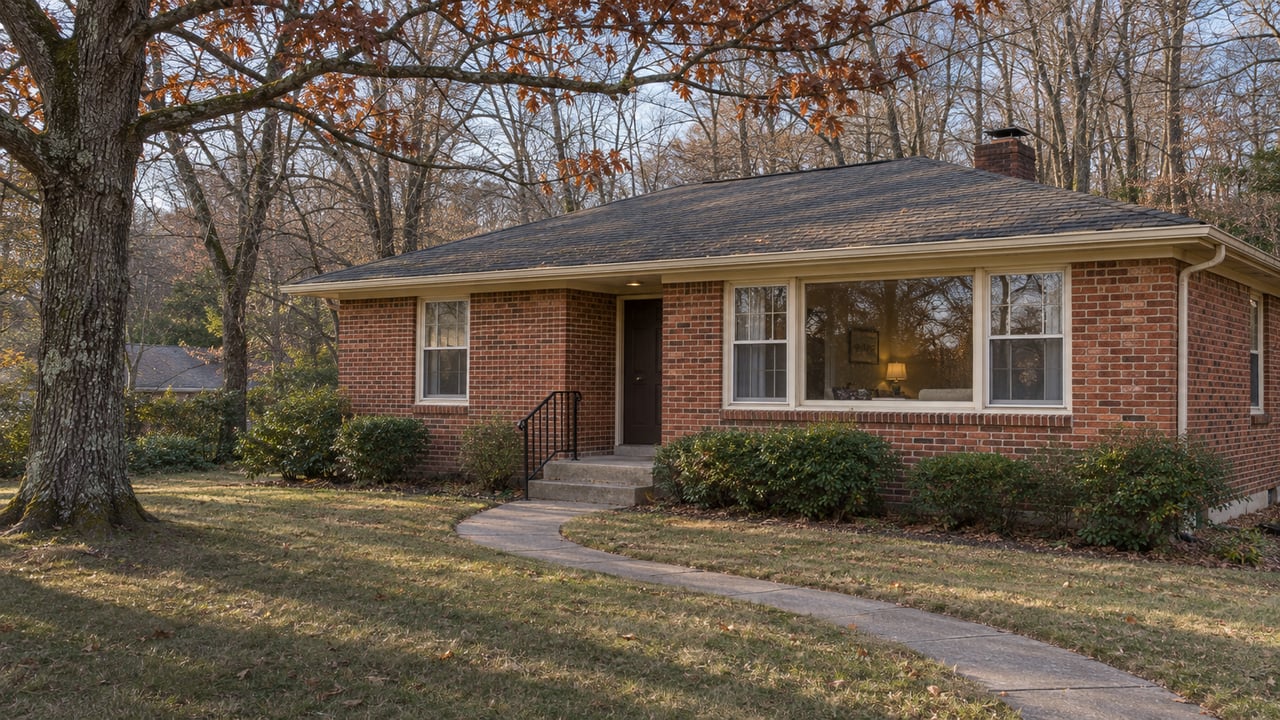
That framing shows up everywhere this year, and it's not wrong. It's just incomplete. A citywide median doesn't distinguish between a renovated bungalow four blocks from Kingston Pike and a 1960s ranch on a half-acre that hasn't been updated since the Clinton administration. Both sales get folded into the same number.
What "Balanced" Leaves Out
South Knoxville tells a different story over almost the same stretch of calendar. Over the three months ending in August 2026, the median sale price there was $305,000, down 17.0% from the same period a year earlier, with homes selling in about 44 days compared with 40 days the year before.
That's not a rounding error. That's a submarket moving against the citywide trend, not with it.
Here's the honest caveat, the kind that matters if you're actually going to act on this number: only 24 homes sold in South Knoxville in August, up from just 9 the year before. Those monthly sales counts are small compared with Knoxville's several hundred monthly closings citywide, and a handful of unusual sales—an estate sale or a fixer-upper that needed to move fast—can make South Knoxville's median more volatile. So the 17% figure alone shouldn't be read as gospel. What makes it worth paying attention to is that it lines up with everything else we're seeing in that part of the city: older housing stock, a wave of new construction elsewhere competing for the same buyers, and a general softening in what appraisers call "value" neighborhoods across Knoxville this year. One noisy number plus a consistent pattern is worth more than either alone.
| Knoxville (metro-wide) | South Knoxville | |
|---|---|---|
| Median sale price | $325K (3 mo. ending June 2026) | $305K (3 mo. ending August 2026) |
| Year-over-year change | +1.7% | −17.0% |
| Days on market | 52 (up from 48) | 44 (up from 40) |
| Homes sold in that month | 782 in June | 24 in August (up from 9) |
Why Bearden and Sequoyah Hills Aren't Feeling It
If South Knoxville is absorbing the softer end of this market, the close-in, established neighborhoods on the other side of the river are barely noticing it. Bearden has spent decades building the kind of infrastructure that keeps demand steady even when rates are high: Kingston Pike running through the middle of it as the main retail and dining corridor, West Town Mall anchoring the west side with more than 150 stores, and Lakeshore Park's nearly 200 acres of trails and event space giving the neighborhood a genuine amenity instead of just a location on a map. Sequoyah Hills, just to the east, holds a similar position with historic waterfront homes on larger, harder-to-replace lots.
In Bearden, that established appeal can help sellers hold their ground even when buyers have more options elsewhere.
That's the mechanism underneath the split. It isn't that South Knoxville and Fountain City are somehow less desirable places to live. It's that they carry more older housing stock competing against builder incentives on new construction nearby, while Bearden and Sequoyah Hills have almost no vacant land left to absorb that kind of competition. Scarcity does the work that a hot market used to do everywhere.
The Mortgage Rate Is Doing the Sorting
None of this happens in a vacuum. Freddie Mac's weekly survey put the average 30-year fixed mortgage rate at 6.43% as of July 2, 2026, still high enough that every extra dollar of monthly payment gets scrutinized. When borrowing costs sit at that level, buyers get pickier, not necessarily fewer. They're more willing to pay close to asking price for something move-in ready in a neighborhood with almost no competing inventory, and far less willing to stretch for a home that needs a new roof or a kitchen update when a builder two miles away is offering rate buydowns on something brand new.
That's the quiet sorting mechanism behind this year's split. It rewards neighborhoods where scarcity already does the pricing work, and it punishes neighborhoods where buyers have an easy, newer alternative down the road. The citywide median smooths all of that into a single number that describes neither situation particularly well.
What This Means If You're Pricing a Home This Fall
If you're comparing neighborhoods or getting ready to list, the citywide figure is a reasonable headline and a poor anchor. The number that matters is what's closing on your specific street, in a home with a similar age and condition to yours, in the last 60 to 90 days, not the last 12 months. A property in a tight-inventory pocket can still price aggressively and draw real interest quickly. A comparable-looking home in a softer submarket may need a more patient strategy, sharper staging, and pricing that acknowledges the new construction it's competing against, rather than pricing to last year's comps.
That's also where a second opinion earns its keep. A neighborhood-specific pricing conversation, grounded in actual recent closings rather than a metro average, tends to save both time and money on either side of a transaction.
FAQ
Is Knoxville currently a buyer's market or a seller's market? Citywide, it reads as balanced: prices are up slightly, days on market are up slightly, and neither side has overwhelming leverage. But that balance looks different depending on the neighborhood, since some submarkets are still tight while others have more room to negotiate.
Why did South Knoxville prices drop so much this year? Part of it is genuine softening tied to older housing stock competing with newer construction nearby, and part of it is a small number of transactions making the percentage swing look larger than it might if more homes had sold in that window. Both things can be true at once.
Does a softer submarket mean it's a bad time to sell there? Not necessarily. It usually means pricing and presentation matter more than they would in a tighter market, since buyers have more comparable options to weigh a listing against.
Every neighborhood in this city is telling a slightly different story right now, and the only way to know which one applies to your address is to look at the actual comps, not the metro headline. If you want a read on what's really happening on your specific street, Tilley Home Group puts together a free home valuation built from local, current data, not a citywide average.