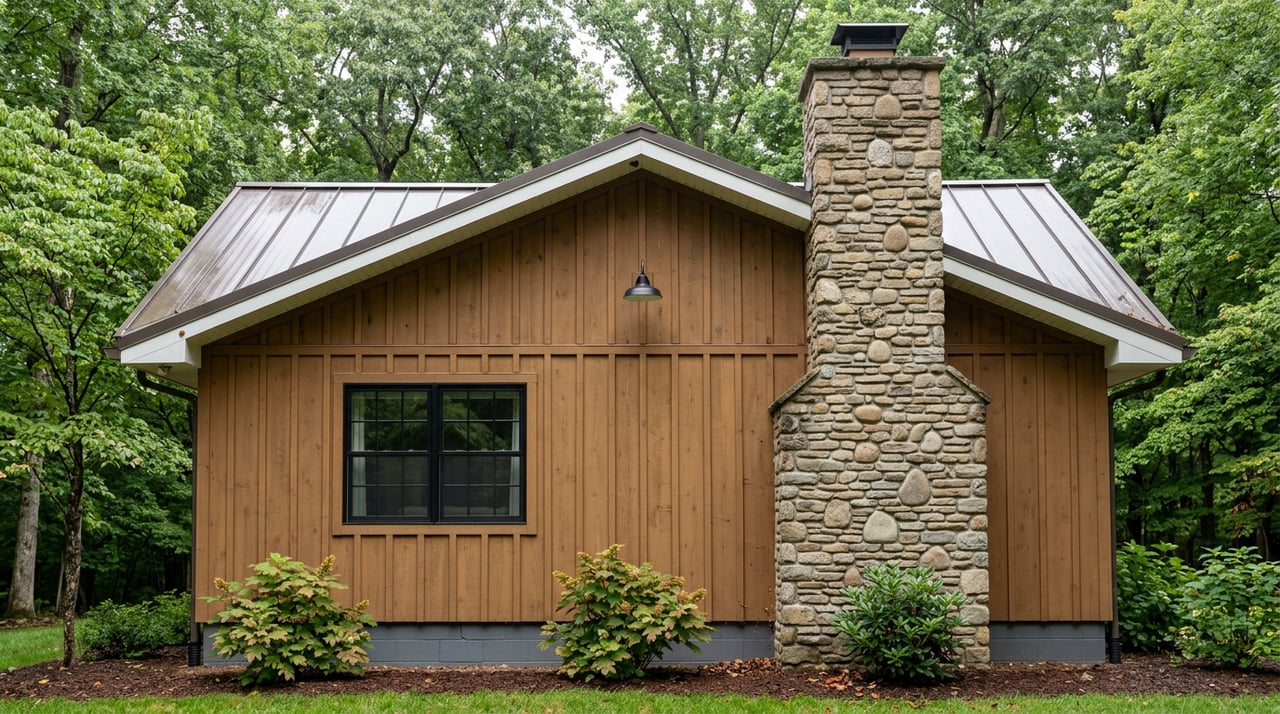
The most valuable sentence in a Townsend cabin listing right now reads something like "proven STR income" or "currently on an overnight rental program." For years, that phrase carried a quiet assumption: whatever the current owner was doing, you could keep doing. In 2026 that assumption stopped being safe. Townsend spent the spring writing the permit process it had required on paper for years, and Tennessee's Legacy Clause, the state protection that shields existing short-term rentals from new local rules, ends the moment a property is sold. So the friction lives right at the closing table. The seller's legacy status stays with the seller. You inherit the new rulebook.
This post is for buyers underwriting a Townsend cabin as an income property, and for second-home buyers who assumed occasional rental would offset the mortgage. The math still works in plenty of cases. It just no longer works automatically.
What "STR potential" used to mean, and what it means now
For roughly the past decade, Townsend cabin listings could rely on a soft regulatory environment. The city's zoning code named "tourist residences" and required a permit, but as Townsend City Manager Don Stallions told the planning commission in March, the permit process had never actually been built. Planning Commissioner Harry McIntosh identified more than 55 Airbnb listings inside city limits and none of them held the permit the code required, because there was no permit to issue. Hosts remitted state and county taxes and operated in good faith. Buyers underwrote deals on that reality.
That reality is now dated. The Townsend Board of Commissioners approved the second and final reading of two short-term rental ordinances in May 2026, and the permit clock is running. If you are looking at a cabin inside Townsend city limits, the deal you are buying today is not the deal the seller has been operating.
The rulebook you inherit
Here is what a new permit holder in Townsend is signing up for, based on the ordinances passed in May:
- A $250 annual permit, with annual renewal and inspection.
- Maximum occupancy of 12 people. A cabin marketed to sleep more than that gets reclassified as commercial lodging, which is a different zoning conversation entirely.
- One off-street parking space per bedroom. On Townsend's wooded, narrow-drive parcels, this is not a paperwork item. It can be site work.
- Safety hardware and signage: smoke detectors, carbon monoxide detectors, fire extinguishers, evacuation plans, chimney and firebox rules.
- A 24/7 local contact authorized to respond to complaints within 45 minutes. Out-of-state owners cannot self-manage from a distance without designating one.
- Layered onto a new 3% city occupancy tax the city has said it will implement alongside the permit program, sitting on top of Tennessee's 7% state sales tax and Blount County's local lodging tax.
None of these are unusual by regional standards. They just weren't in force when the seller built their booking calendar and pro forma.
The Legacy Clause, and why it doesn't ride along with the deed
The single most important sentence in this whole post is the one about legacy. Tennessee's Short-Term Rental Unit Act, enacted in 2018, is genuinely host-friendly. It bars local governments from outright banning short-term rentals and it protects properties that were already operating before a new local rule was passed. That protection is called the Legacy Clause, codified at T.C.A. § 13-7-603(a), and it is the reason so many East Tennessee cabin listings can honestly claim continuous rental history.
Read the MTAS summary of the Act carefully and you find the exit ramps. Legacy status ends when the property is sold or transferred, when short-term rental use stops for 30 continuous months, or after three violations of generally applicable local law with no appeal remaining. The first of those is the one that matters at closing.
A legacy cabin's protection belongs to the person who was operating it when the ordinance passed. It is not an easement. It is not a title feature. It does not convey.
The buyer walks in the door under the new ordinance. If the cabin has four bedrooms on a narrow gravel drive with room for two cars, that is now a compliance problem for the buyer to solve, not a hypothetical the seller ever had to face.
What the new rules do to the pro forma
Townsend inventory is not moving quickly. Median list prices sat near $550K in April 2026, with median time on market at 109 days. A separate market read pegged the median closer to $525K, down about 11% year over year, with the average home value roughly flat. Two things follow from those numbers.
First, the "cabin pays for itself" line that populates broker copy across the Smokies needs a haircut in Townsend specifically. Add the $250 annual permit, the inspection cost, the 3% city occupancy tax on gross rents, and whatever site work the parking rule triggers. On a cabin grossing $60,000 a year, the occupancy tax alone is roughly $1,800 that wasn't in last year's spreadsheet.
Second, 109 days on market is leverage. Buyers have time to do the diligence the market moved too fast to permit in 2021 and 2022. The current pace supports asking hard questions about permit status, parking geometry, and jurisdiction before writing the offer, and it supports walking away when the answers don't reconcile.
The pro forma also changes shape for larger cabins. A five- or six-bedroom cabin that has been sleeping 14 or 16 guests loses its top nightly rate tier under the 12-person occupancy cap. That is not a small revision. Group-rental cabins in the Smokies command a premium precisely because they can host reunions and wedding parties. Reprice the offer accordingly, or plan on operating below advertised sleeping capacity.
Where covenants beat legacy
There is a version of this story where the ordinance matters less than the plat map. Some Townsend-area communities have covenants that explicitly permit short-term rental use, and unlike legacy status, restrictive covenants transfer with title. Laurel Valley is the clearest example. It is a gated community with HOA dues around $1,100 per year, paved roads, and covenants that expressly allow both residential and short-term rental use. The community wraps around the Wild Laurel Golf Course, and the covenants sit inside the deed rather than inside a state grandfather clause.
That distinction matters. A buyer who wants durable STR rights is often better served in a community where the right lives in the covenant than in a general-residential parcel where the right lived in one owner's timeline. Cades Cove Reserve, Big Valley Resort, and Sundown Resort each have their own covenant language and their own product logic. Sundown, for example, is a lot-and-RV format that behaves nothing like a Laurel Valley cabin at underwriting.
One other jurisdictional wrinkle: Townsend's ordinance applies inside city limits. Cabins on the Wears Valley side, in unincorporated Blount County, or across the line in Sevier County operate under different rules entirely. Pull the parcel and confirm the jurisdiction before you make assumptions either direction.
Six questions to ask before you write the offer
- Is the parcel inside Townsend city limits? Confirm with the county GIS, not the listing description.
- Has the seller applied for the new Townsend short-term rental permit? If yes, request the application and inspection notes. If no, price the permit, inspection, and remediation into the offer.
- How many off-street spaces exist today, and how many bedrooms does the cabin have? If the ratio is short, get a bid for driveway expansion before removing contingencies.
- What does the actual advertised sleeping capacity look like against the 12-person cap? If a listing sleeps 14, the top rate tier is going away at closing.
- What do the covenants say? Ask for the recorded HOA documents. A covenant that permits STR use is stronger than legacy status because it transfers.
- Who is the 24/7 local contact going to be? If you live out of state, budget for a property manager who can respond within 45 minutes, and get that quote before you commit.
FAQ
Do the new Townsend rules apply to cabins I already own? The city and Mayor Don Prater have said existing operators are largely protected under state law. What changes at your closing is that the buyer takes the cabin under current rules, not the rules in place when you started renting.
Is the moratorium on new short-term rentals still in place? The March 2026 planning commission recommendation was a temporary pause to give staff time to write a permit process. That process passed on second reading in May. The permit itself is what buyers should be tracking now.
What about cabins just outside Townsend, in Wears Valley or unincorporated Blount County? Different jurisdiction, different rules. Tennessee's state framework still applies statewide, but city-specific permit, occupancy, and tax requirements do not follow the parcel across a boundary. Verify jurisdiction on the county parcel viewer before writing offers on either side of the line.
How should I think about the 3% occupancy tax in a pro forma? Layer it on top of the 7% Tennessee state sales tax and any Blount County lodging tax that applies. On gross rental revenue, not net. Most booking platforms can collect and remit some of the tax stack, but the operator remains responsible for registration and any gap the platform doesn't cover.
If you are underwriting a Townsend cabin this fall, or reworking a pro forma on one you already own, we would rather answer the questions before you write the offer than after. Tilley Home Group works the Maryville, Townsend, and greater Blount County market every week, and we can walk you through jurisdiction, covenants, and current inventory before you commit. Get Your Free Home Valuation to start the conversation.